The Future of Work: Emotional Intelligence as Your Superpower
 Iamgr8 Academy
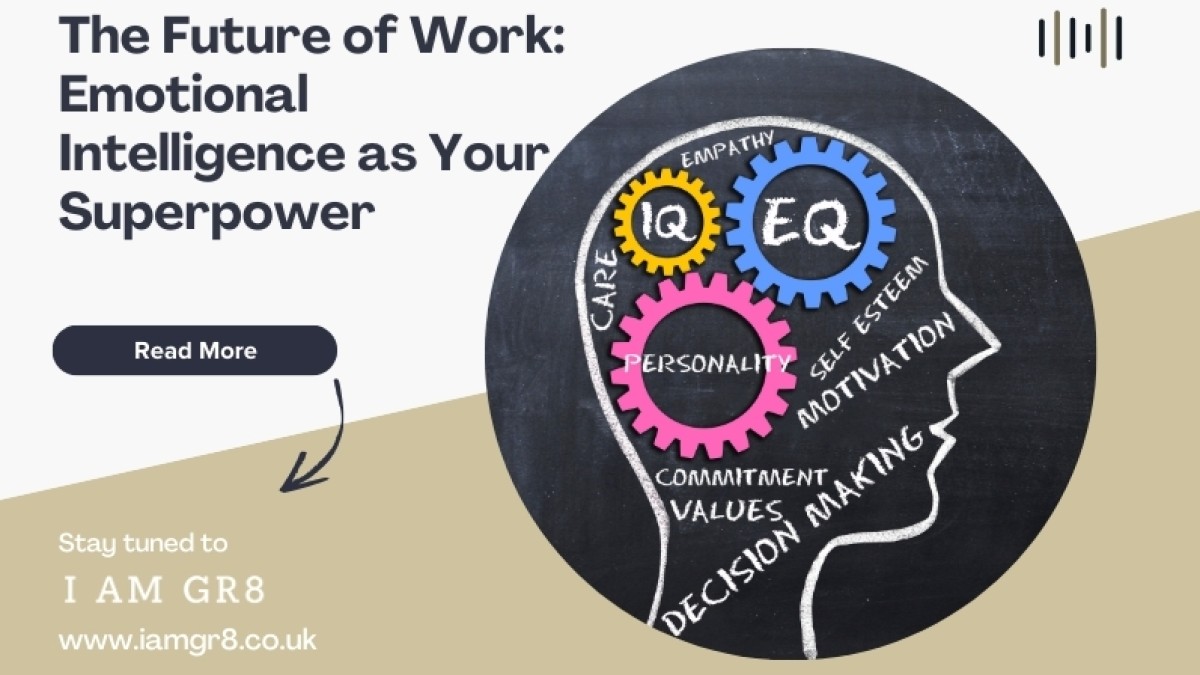
Introduction: Why EQ Is the Career Skill Everyone’s Talking About
In today’s competitive UK job market, technical expertise alone isn’t enough. Professionals who stand out aren’t just those with the highest IQ, they’re the ones with the highest emotional intelligence (EQ). Emotional intelligence, the ability to recognise, understand, and manage your own emotions while empathising with others, is fast becoming a key differentiator in career success.
With workplaces evolving, remote collaboration increasing, and leadership expectations rising, mastering EQ is essential. At Iamgr8, our GR8 Formula, covering Mindset, Money, Network, and Health provides practical tools to build emotional intelligence into your daily life, helping you thrive personally and professionally.
The Science Behind Emotional Intelligence
Research consistently shows that EQ can predict career success better than IQ. According to Daniel Goleman, a pioneer in EQ research, individuals with high emotional intelligence tend to:
- Build stronger relationships
- Communicate more effectively
- Handle stress and conflict better
- Lead teams with empathy
A study by TalentSmart found that 90% of top performers have high emotional intelligence, highlighting its critical role in leadership and professional growth.
Emotional Intelligence in the Workplace
EQ isn’t just a “nice-to-have” soft skill, it’s a career superpower. Here’s how it impacts different aspects of work life:
- Leadership: Leaders with high EQ inspire trust, navigate conflict with tact, and motivate teams effectively.
- Teamwork: Colleagues who understand emotions can collaborate seamlessly and prevent misunderstandings.
- Decision-Making: EQ improves judgment by integrating rational thinking with emotional awareness.
- Resilience: Handling stress, setbacks, and change becomes easier when you understand and regulate your emotions.
For UK professionals, especially those in fast-moving sectors like tech, finance, and creative industries, EQ is becoming a core expectation rather than an optional skill.
Practical Ways to Develop EQ with Iamgr8
Developing emotional intelligence is a journey, not a one-off task. Here’s a step-by-step approach aligned with the GR8 Formula:
1. Mindset:
- Daily self-reflection: Note emotional triggers and responses.
- Gratitude journaling: Shift focus from challenges to achievements.
2. Network:
- Active listening exercises: Focus fully on the speaker without preparing your reply.
- Empathy mapping: Consider the perspectives of colleagues, clients, and friends.
3. Health:
- Stress management techniques: Mindfulness, deep breathing, or short walks.
- Emotional regulation: Recognise signs of burnout before they escalate.
4. Money:
- Negotiation with EQ: Approach financial discussions with empathy and clarity.
- Financial stress management: Understand emotions around spending and saving to make better decisions.
These strategies aren’t just theoretical, they are actionable steps that you can integrate into your daily routine.
Case Study: James’s EQ Transformation
James, a marketing manager in Manchester, was struggling with team engagement and conflict resolution. Through Iamgr8’s GR8 Formula exercises, he focused on building his emotional intelligence:
- Mindset: Practiced daily self-reflection for 5 minutes.
- Network: Implemented active listening during meetings.
- Health: Used mindfulness exercises to manage stress.
Within two months, James noticed significant improvements: team collaboration increased, workplace stress reduced, and his leadership confidence soared. This demonstrates that EQ development isn’t just theoretical…it has tangible career benefits.
Top Tips for Boosting EQ in Your Career
- Start With Self-Awareness: Notice your emotions and reactions in different scenarios.
- Practice Empathy: Actively consider how others might feel before responding.
- Improve Communication: Focus on clarity, tone, and non-verbal cues.
- Learn to Manage Conflict: Approach disagreements with understanding, not defensiveness.
- Seek Feedback: Ask colleagues or mentors for honest insights on your emotional interactions.
By making these habits part of your routine, EQ becomes second nature, enhancing both professional success and personal wellbeing.
Why EQ Is the Future of Work
As automation and AI reshape industries, human-centric skills like emotional intelligence gain unmatched value. Jobs requiring empathy, leadership, and collaboration can’t be fully replaced by technology. Professionals who invest in EQ are not only future-proofing their careers, they’re also cultivating happier, more productive workplaces.
Your Next Promotion
Your next promotion or career breakthrough could hinge on your emotional intelligence. Join the Iamgr8 community today and access practical tools and exercises to strengthen your EQ across the GR8 Formula pillars. Start building the superpower that sets you apart in the modern workplace.